Australia held the pen at this year's UN climate talks. The summit ended without a final deal, but the real action moved somewhere investors can follow it.
For two weeks in November, Chris Bowen ran the world's climate negotiations. Under the hosting deal struck in 2025, Türkiye hosted COP31 in Antalya and Australia led the negotiations, with a Pacific pre-COP in Fiji in October putting our region's priorities on the agenda from the start. It was the most visible role Australia has ever played in global climate diplomacy, and it ended in a result that pleased almost nobody in the room. For anyone whose super, savings or investments are meant to support the transition, the outcome is worth understanding, because what failed and what worked tell us a lot about where climate progress, and climate capital, is heading.
What happened
COP31 ran from 9 to 20 November and then kept going. The final gavel fell on Sunday evening, nearly 50 hours behind schedule, making it the longest COP on record (Carbon Brief, 2026). More than 92,000 people registered, which may also make it the largest.
The headline is that there was no headline. The overarching "Antalya pact" was rejected in the closing plenary after at least 32 countries, including the EU, the UK and several Pacific nations, objected that it was too weak. The EU pointed out that the text did not mention fossil fuels at all. Instead, the presidency salvaged agreement on 36 separate agenda items (Hürriyet Daily News, 2026), most of them procedural, with the harder questions on national targets, adaptation finance and a just transition pushed to next year's talks in Bonn or to COP32 in Addis Ababa.
The backdrop made agreement harder still. The United States sent no official delegation for the second year in a row, and the UN's latest Emissions Gap Report shows the world heading for 2.8°C of warming under current policies, or 2.1°C if every pledge and net zero target is met in full (UNEP, 2026).
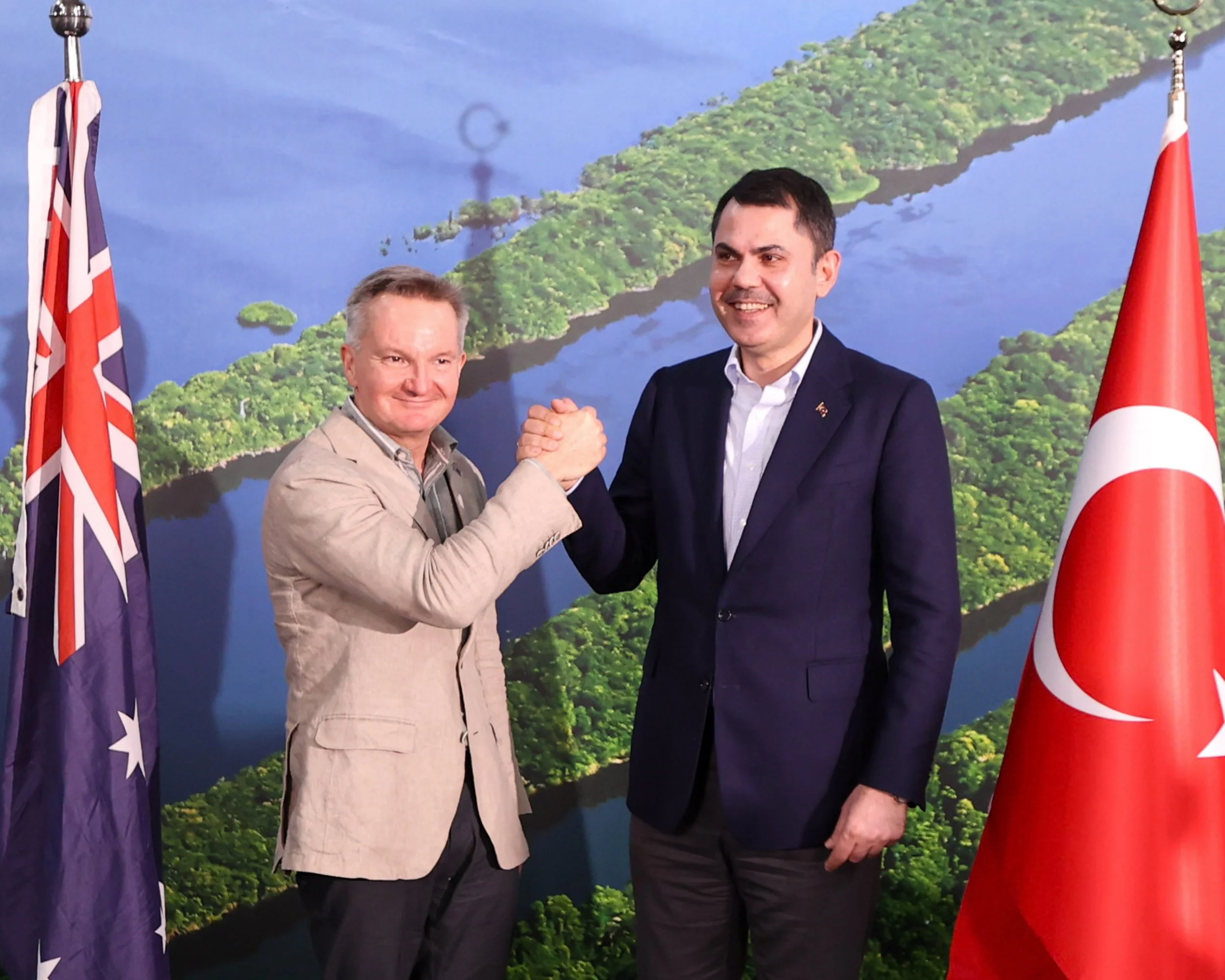
Chris Bowen with Turkey’s environment minister, Murat Kurum, at Cop30 in Brazil. ‘While Bowen’s role will not formally kick off until Cop31 opens next November, in reality it begins next week.’ Photograph: Anadolu/Getty Images
The good: progress happened outside the final text
The most useful outcomes came from groups of countries that chose to move without waiting for consensus. Around 80 nations, with Australia's support, signed up to a "35 by 35" target to make electricity 35% of final energy use by 2035. That is a concrete, measurable goal, and electrification means grids, batteries, heat pumps, electric transport and the minerals and manufacturing behind them. An Electrify Now Finance Coalition aims to mobilise more than US$1.2 billion, and a new Climate Implementation Bridge is designed to turn national plans into projects that investors can actually fund.
Our region also came away with more than words. Australia committed A$100 million to the Pacific Resilience Facility, a Pacific-owned fund for local climate adaptation, plus A$75 million for 14 renewable energy projects across seven Pacific countries (PINA, 2026). The facility now holds about US$200 million towards its US$500 million target (AAP via National Indigenous Times, 2026). The pre-COP in Fiji added a Global Rooftop Solar Pledge, and a long-running dispute over the Adaptation Fund was finally resolved, giving developing countries a majority on its board. Carbon Brief called it one of the few bright spots of the fortnight.
The bad: money, fossil fuels and broken promises
No final text mentions fossil fuels, two years after the world agreed in Dubai to transition away from them. Roadmaps for that transition now sit with coalitions of willing countries outside the formal process. A goal to triple adaptation finance to US$120 billion a year by 2035 was dropped from every text, and the loss and damage fund holds pledges of US$342 million against US$2.8 billion in requests from 119 countries. Carbon Brief's analysis found new climate finance pledges down about 70%, prompting Barbados prime minister Mia Mottley's pointed reminder that pledges are not payments.
Pacific leaders were blunt. Vanuatu's climate envoy said the COP process is broken, and Fiji declared itself deeply disappointed. More than 100 civil society organisations signed an open letter calling it one of the most disappointing COPs on record.
Australia's role drew criticism too. Our coal exports are projected to hold at around 350 million tonnes a year to 2030 (Down To Earth, 2026), the North West Shelf gas project has been extended to 2070, and the Climate Council counts at least 37 fossil fuel projects approved since 2022. Supporters of those approvals point to energy security, jobs and the needs of trading partners. Critics argue that leading the negotiations while expanding exports undercut Australia's credibility at the table. Both views were heard in Antalya, and investors should expect that tension to keep shaping Australian policy.
What it means for financial advice and impact investing in Australia
Our view at UNLESS is that COP31 was disappointing and clarifying in equal measure. When nearly 200 governments can't agree on a sentence about fossil fuels, the job of moving the economy falls more heavily on coalitions, companies and capital. That puts investors, including every Australian with super, closer to the centre of climate progress than ever.
At home, the settings that matter most were already in place before Antalya. Australia's 2035 target of a 62 to 70% cut on 2005 levels came with a A$5 billion Net Zero Fund and an extra A$2 billion for the Clean Energy Finance Corporation (PM of Australia, 2025). Mandatory climate reporting is rolling out to more companies, and Australia's sustainable finance taxonomy now gives investors a common test for what counts as green. Those tools matter because they make claims checkable. One watchpoint is the 2026 Budget proposal to double the thresholds for the smallest companies required to report, which would take about 1,500 companies out of scope if legislated (DLA Piper, 2026).
For financial advice, we see three shifts:
Risk - With the world tracking well above 1.5°C, law firms are already advising companies to stress-test their climate disclosures against an overshoot scenario (Clayton Utz, 2026), and advisers should be asking the same questions of the portfolios they recommend, including how exposed a super option is to coal and gas demand that may fall faster than export projections assume.
Scrutiny - As the language of climate commitment gets louder and the delivery gets patchier, the gap between a fund's marketing and its holdings and voting record is where good advice earns its keep.
Opportunity - Electrification now has a global target behind it, and adaptation is chronically underfunded, with small island states receiving just 0.2% of global adaptation finance. That gap is exactly where impact capital can do the most good, through listed companies building grids and storage, private funds backing local resilience, and blended finance structures that bring public and private money together in our region.
The ripple effect
COP31 showed the limits of waiting for consensus. Progress came from those willing to commit money and set targets regardless, and it will keep coming that way. Every dollar in a super fund, a portfolio or a giving account is a small vote for the economy we want, and those votes count for more when governments stall. Our role is to help you cast yours with care and intention.
If you'd like to understand how your super and investments line up with the transition, and where your money could do more, book a free call with our team. We'd love to help you make your money make a difference.
Sources and further reading
AAP via National Indigenous Times | Australia under fire as Pacific seeks climate lifeline | 2026 | Pacific Resilience Facility funding and criticism of Australia
Carbon Brief | COP31: Key outcomes agreed at the UN climate talks in Antalya | 2026 | Full breakdown of the negotiated outcomes and reactions
Clayton Utz | COP31 in Antalya: Australia takes the gavel at the 'Implementation COP' | 2026 | What the outcomes mean for Australian business and disclosure
DLA Piper | Changes to Australia's sustainability reporting regime | 2026 | Proposed changes to mandatory climate reporting thresholds
Down To Earth | Australia set to maintain coal exports at 350 million tonnes a year until 2030 | 2026 | Australia's fossil fuel export outlook
Hürriyet Daily News | COP31 reaches agreement on 36 issues despite final pact deadlock | 2026 | How the summit closed
PINA | Australia backs Pacific climate priorities as Bowen highlights clean energy shift | 2026 | Australia's Pacific announcements at COP31
Prime Minister of Australia | Setting Australia's 2035 climate change target | 2025 | Australia's 2035 target and Net Zero Plan funding
UNEP | Emissions Gap Report 2026 | 2026 | Current warming projections