Making Waves is our regular spotlight on clients in the UNLESS community doing impactful work worth knowing about. This month we have Felicity Stevens, a climate champion who runs The Rangers Cottage, a 100-year-old short-term rental in Sydney / Gadigal.
Felicity Stevens and her husband David did not set out to run a sustainable business when they started The Rangers Cottage. It became their advantage anyway. One guest told Felicity she loved staying with them because of all the steps they take to run the place sustainably, and she wished she could find more places like it.
That comment sparked an idea that guests are already looking for the better option, and a host's job is to make that option easy to choose. "My job is just to make the sustainable choice the easy one," felicity comments about her purpose and role in the guest accommodation industry.
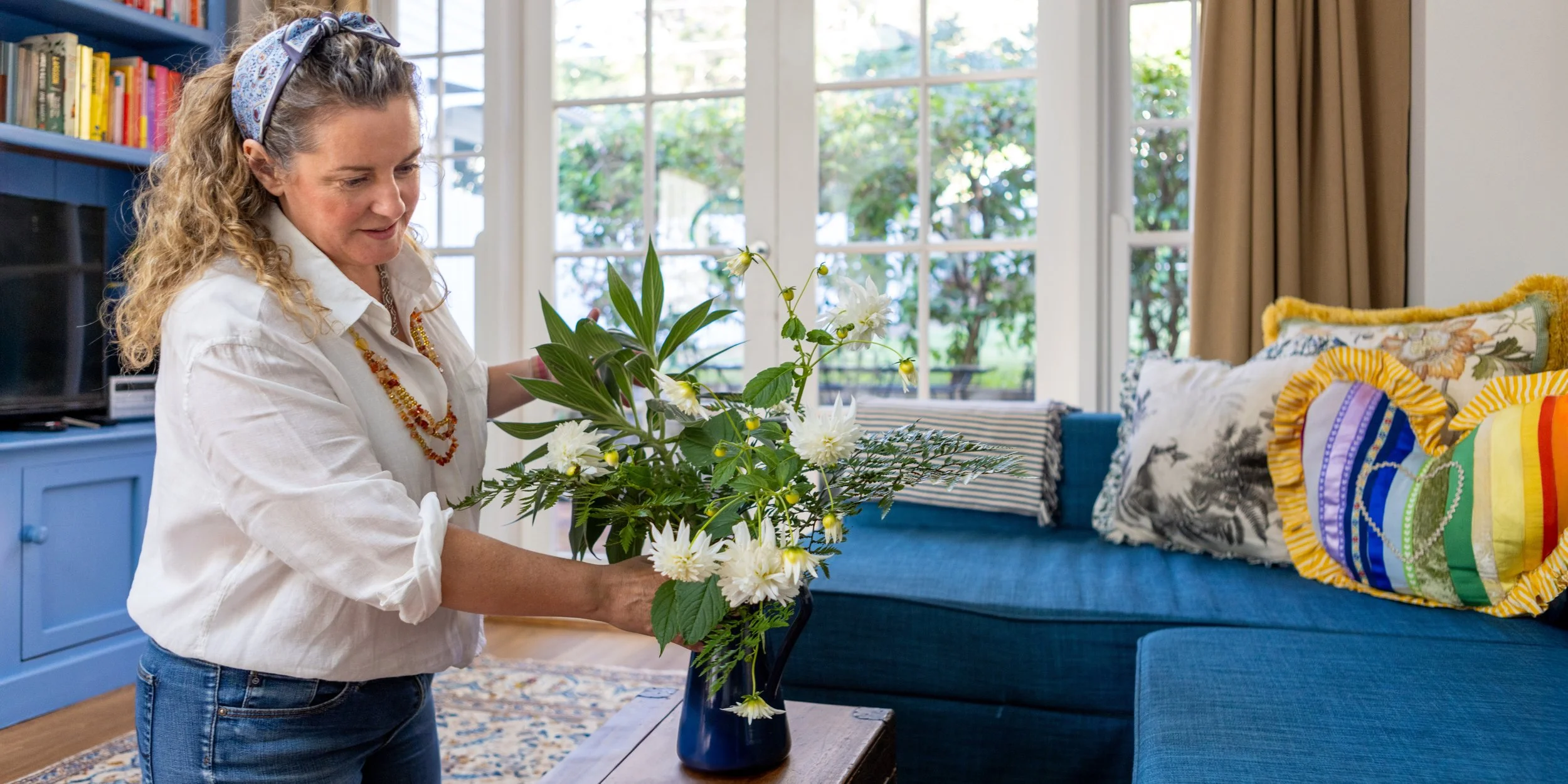
Pictured: Felicity Stevens. Credit: @robinwyatt.photography
The guest who asks questions
Felicity is a New Zealander who has called Sydney home for over 25 years. She comes from a family of educators, and her husband David comes from a family of scientists. Between them, she says, they are "a blend of evidence and action." She was also raised by grandparents who taught her to repair, reuse, and never waste anything.
She thinks about every single thing the cottage does, from setting up and maintaining the property to the messages sent to guests. Her approach starts with a simple observation: "At every step there are choices we make — and often there's a better, more sustainable option hiding in plain sight." The coffee machine is a good example. A bowl sits beside it for used aluminum pods, and guests are asked to leave their pods there so they can be recycled. She says 100 per cent of guests who use the machine do it. One guest told her she had stopped using a hotel's identical machine because she could not bear the waste of a pod she would never see recycled.
Toilet paper followed the same path. First, it was plastic-free, then from a brand that gave back to good causes, and finally a local brand made in Australia. The cottage also keeps books on the shelves, including The Lorax for the little ones (fun fact, our business name was inspired by a famous quote from The Lorax) and Saul Griffith's The Big Switch for adults. The guest always decides whether to join in, but Felicity says much sustainability messaging leaves people feeling overwhelmed or lectured. "My approach is the opposite," she says. "I try to make it fun, practical, engaging and genuinely relatable." She has learned that "guests genuinely love it when you do."
Guests were already paying attention
The compost bin shows how many guests were already paying attention. An article published in Felicity published online as The Holiday Host describes a guest peering over the fence and asking whether they could use it. In which now more than 70 per cent of guests take part in composting kitchen scraps at her cottage.
Felicity points to Booking.com's latest research, which found that "85% of travelers say more sustainable travel is important or very important to them." She has also noticed the gap on the platform itself: "Right now Booking.com is the only major platform that lets guests search for a sustainable property." She would like that to change, commenting that "I'd love every platform to offer that kind of search." She would also like properties to be able to highlight what they are actually doing to reduce their operating emissions.
Other hosts started asking how she did it, and that was the point where a private habit began to look like a model worth sharing. She began writing things down, built a website, and started posting on Instagram, @therangerscottagemanly and @sustainablehosting.au, with a YouTube series to come. Stay tuned!
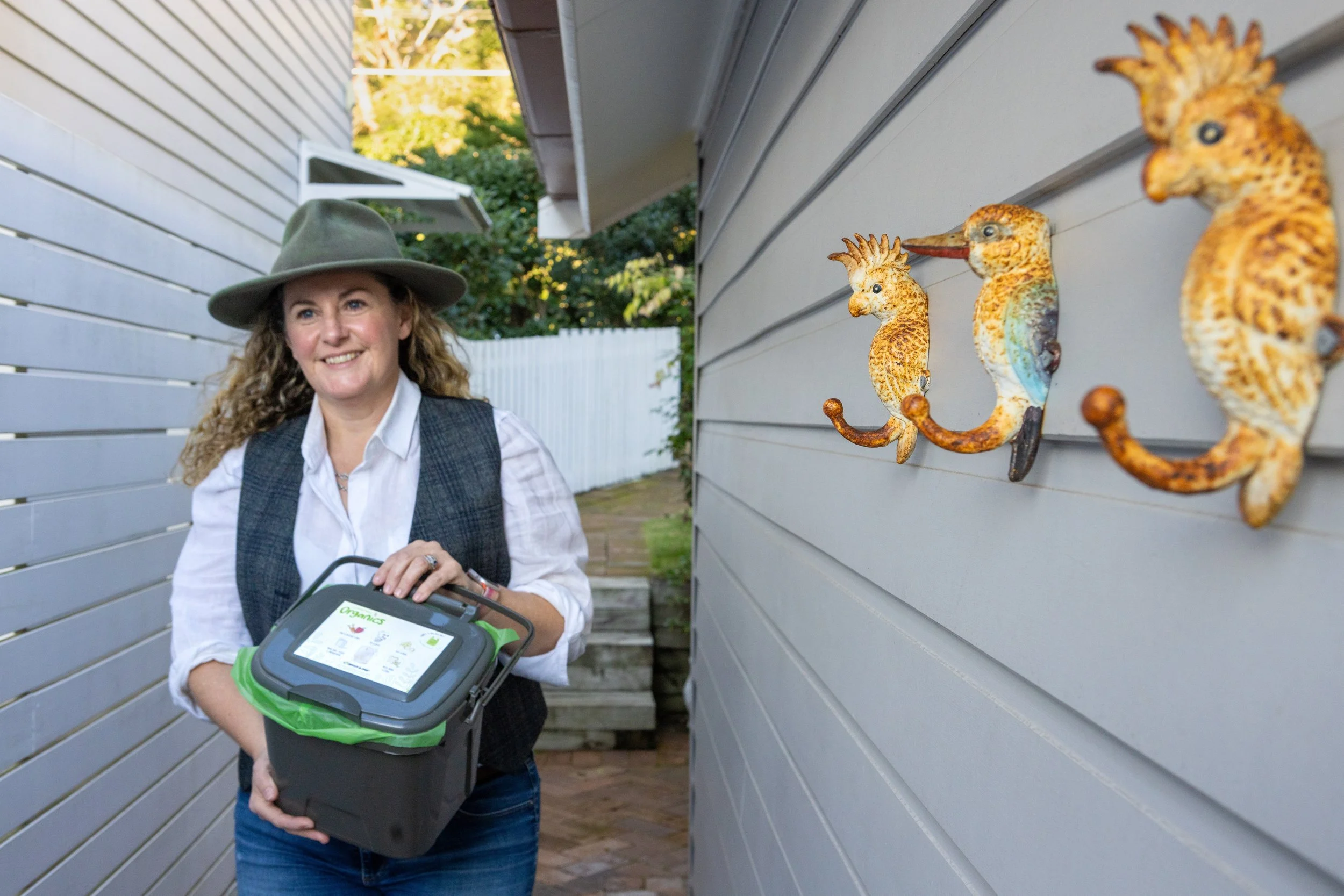
Pictured: Felicity Stevens. Credit: @robinwyatt.photography
Measuring what works
Felicity is working through a formal certification of her own. She describes it as a "tough, time-consuming and expensive process", and says, "I've almost finished my own certification." She says it matters, because it "gives guests confidence that what you say you do, you actually do."
Felicity has also researched how electric vehicle drivers choose where to stay, stop, and spend. Many hosts worry about offering charging, both the cost of installing and running it, and how to offer it safely. She uses that work in workshops for short-term rental hosts and other tourism businesses, covering how to add safe, cost-effective charging and how to use it to attract guests. "They've been a real hit," she says.
Her work with the government and industry is growing too. Earlier this year she worked with the team at NSW Department of Climate Change, Energy, the Environment and Water (DCCEEW) on a new EV charging guide for tourism operators, which is yet to be published. She also helped run a business electrification forum at the Everything Electric Show. Each project tends to inspire and lead her towards the next.
Scaling without diluting
Felicity's dinners are a different kind of work. Climate Friends started six years ago as a simple low-carbon meal for a few friends. It now brings together people from finance, law, medicine, transport, and government around one table. In those informal settings, professional silos fall away. She says, "these trust-based, joyful connections are the connective tissue of real change: we talk a lot about policy and innovation, but community matters just as much."
Her volunteer work and advocacy run alongside that. She runs the official Airbnb Sydney Host Club, part of a global network, and says she also served three years on Airbnb's international Host Advisory Board. Her proudest moment from that role, she says, was helping launch Airbnb's Earth Day events for hosting clubs around the world. She also volunteers with Zero Emissions Solutions, a not-for-profit that runs free community workshops on electrifying homes.
Felicity will utilise her research from EV drivers around the country, as well as feedback from tourism operators and their views on installing EV charging at the EV Charging Infrastructure 2027 conference held in Melbourne / Naarm, in February 2027.
When Felicity started out, she says, sustainability was often a "nice to have" sitting alongside the real business. That is changing. Travelers are demanding it, and climate change is now a direct operational reality, with extreme heat, disrupted bookings and guests changing their plans.
Why UNLESS
Felicity's answer about investing and financial planning starts from the same place as her guest work. "One of the most impactful things any of us can do on climate is to think about who we spend with, who we bank with, and who we invest with — so it only made sense to find a financial planner who understands that too."
It is easy to think hard about every choice inside a business and then accept a default setting for the money behind it. The savings, the super and the business's own reserves can sit on autopilot while the rest of the operation is carefully designed.
Felicity was clear about what she needed from an adviser like Justin Medcalf. "I didn't want someone who'd merely tolerate my values as a quirk to work around; I wanted someone for whom that alignment was simply the baseline." That is how we start with every client at UNLESS. Values are the starting point of the advice, not an extra added at the end.
If you share these principles and are thinking about how your savings and investments can help shape the future you want to see, we’d love to hear from you. An initial conversation is a chance to explore what matters to you, where you’re at financially and what you’d like your money to achieve.
You can find us at unless.financial.