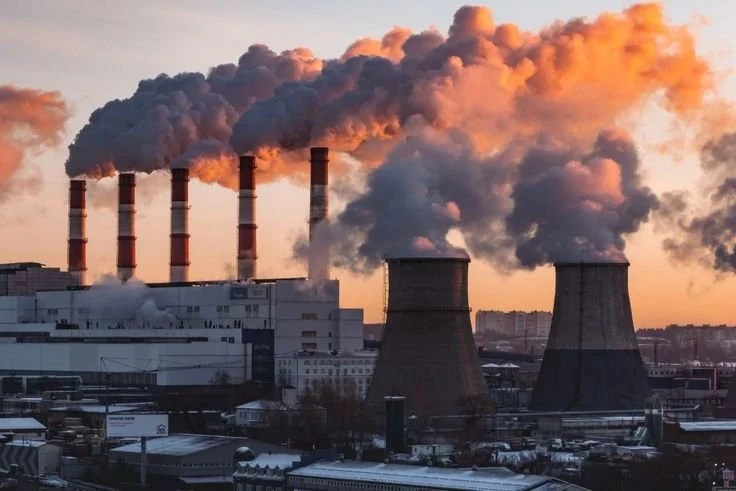
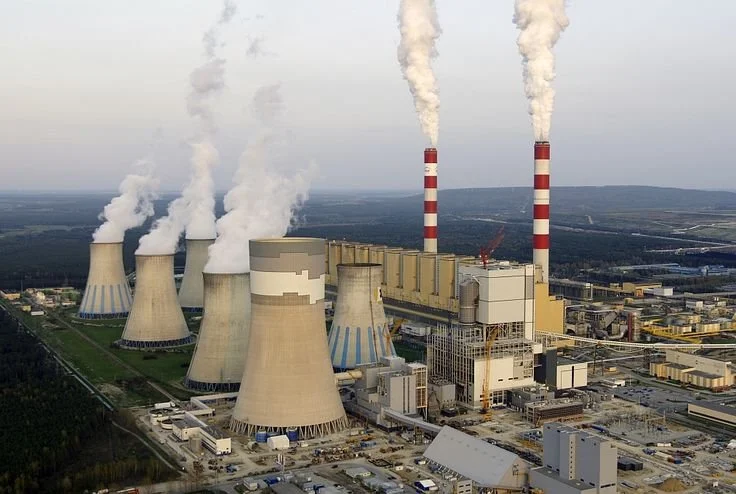
Your Super is Betting on the Earth. Here's What That Means.
On April 22, the world marks Earth Day. In Australia, the conversation will likely centre on climate targets and renewable energy. Important topics, no doubt, but still only part of the picture. Because Australia’s $4.5 trillion superannuation system depends on something far more fundamental: the earth itself. Not just the climate, but the soils, forests, minerals, water, and living systems that underpin every company your super invests in.
The invisible dependency most investors don't see
Your super fund doesn’t just hold stocks and bonds. It holds claims on businesses that extract, produce, and sell things. And every single one of those things originates in nature.
Agricultural companies depend on soil health and freshwater. Mining companies rely on finite mineral reserves and water access. Energy systems depend on infrastructure exposed to extreme weather. Food production relies on pollination, rainfall, and climate stability. Infrastructure depends on functioning ecosystems to reduce flooding and erosion. Pharmaceuticals rely on biodiversity for discovery. Fisheries depend on stable fish stocks (RIAA, 2024).
This isn’t an environmental observation. It’s a financial one.When ecosystems degrade, the companies that rely on them face rising costs, disrupted supply chains, and increasing regulatory pressure. Over time, that flows through to earnings, asset values, and ultimately, your super balance.
Why financial risk tracks ecosystem decline
Over the past decade, ESG has evolved from a niche concept into a core part of financial risk analysis. What regulators and investors are increasingly recognising is simple: environmental degradation is a cash flow issue.
APRA has begun explicitly assessing climate and natural disaster risk as a financial stability concern (APRA, 2025). When water becomes scarce, crops fail. When forests are cleared, supply chains shift. When fisheries collapse, revenue disappears.
We’re already seeing early signs of this dynamic. Drought conditions across parts of Australia have reduced agricultural output in recent years, increasing costs for producers and placing pressure on margins. At the same time, rising insurance premiums in flood- and fire-prone regions are affecting property values and infrastructure investments.
Looking ahead, the scale of the risk becomes clearer. Research cited by the World Wildlife Fund indicates that nature loss could put trillions of dollars of economic value at risk globally by 2050 (WWF, 2024). While estimates vary depending on methodology, the direction is consistent: ecosystem decline presents a material financial risk. Australia, with its reliance on agriculture, tourism, and natural resources, is particularly exposed.
The insight: you can’t diversify away from nature
Here’s where many investors get it wrong. They assume the solution is to move their super into a “sustainable” or “green” fund. These options can play an important role, but they don’t address the deeper reality. Your super cannot escape nature. It can only invest in how well it is managed.
A traditional diversified portfolio already holds companies deeply dependent on natural systems. In many cases, those investments assume those systems will continue to deliver stable, abundant resources at current rates. That assumption is becoming less certain.
The real question is not whether your portfolio has environmental exposure. It already does. The question is whether it is positioned for a future where natural systems are restored and maintained, or one where they continue to degrade. Portfolios that allocate capital toward regenerative agriculture, sustainable fisheries, water security, and resilient infrastructure are effectively backing the scenario where their underlying assets remain viable.
What this means for your retirement
If you’re in a default super option, your money is likely spread across the market. That means exposure to companies managing natural systems well — and others that are not. For most investors, that exposure is largely invisible. Thus a practical starting point is to look a little closer. Start by asking your super fund:
How do you assess risks like water scarcity, deforestation, or biodiversity loss?
Do you stress-test investments against extreme weather scenarios?
Are nature-related risks actively measured and managed?
Then take it one step further:
What investment options are available within your fund?
How do “sustainable” or “impact” options differ from the default?
What evidence supports their approach?
The encouraging part is that this is not a fixed outcome. Financial markets are beginning to price these risks more explicitly, and capital is gradually shifting toward more sustainable and resilient models. The direction is changing, even if the pace is uneven.
The Ripple Effect
Earth Day reminds us that nature is valuable. What’s often left unsaid is that nature is foundational. Your retirement savings are already betting on the future of the earth. The only question is whether your money is aligned with a future that holds together — or one that slowly comes apart.
If you’re wondering what this means for your own super or investments, a free 20-minute chat with an expert adviser at UNLESS is a good place to start: unless.financial/book-a-call
Want this kind of insight (and more) in your inbox each month? Sign up to our Ripple Effects newsletter at unless.financial/ripple-effects.
References
Australian Prudential Regulation Authority (APRA), Corporate Plan 2025-26, 21 August 2025.
World Wildlife Fund (WWF), Living Planet Report 2024, 10 October 2024.
Responsible Investment Association Australasia (RIAA), Nature Investor Toolkit, 1 September 2024.